
Protein & Satiety
Protein Intake, Fullness Signals and the Patterns Behind Them
Tobias Marsden · 5 March 2026 · 11 min
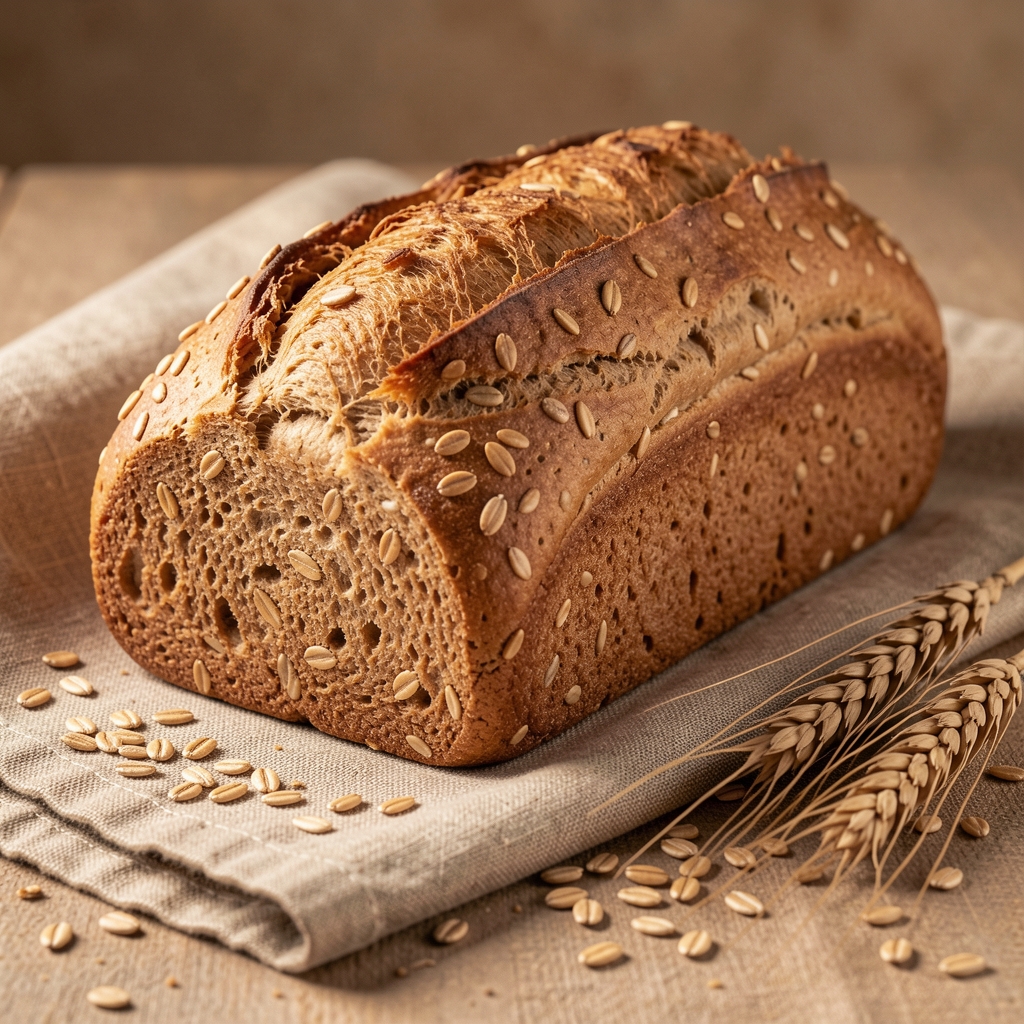
London, February 2026 — The prevailing conversation about carbohydrates and body weight has long been conducted in extremes. Whole grains are either indispensable or entirely suspect, depending on the decade and the publication. The nutritional research record, read carefully and in aggregate, offers a different and more measured account.
A whole grain retains all three components of its original kernel: the bran (the outer layer), the germ (the nutrient-rich embryo), and the endosperm (the starchy interior). Refining strips away the bran and germ, leaving primarily the endosperm. The resulting product is lower in fibre, B vitamins, iron, and a range of phytonutrients present in the outer layers.
From a calorie standpoint, whole and refined grains are broadly similar. A 40g serving of oats and a 40g serving of white rice flour carry comparable energy values. The divergence lies not in the calorie count but in the nutrient density and the downstream effects on satiety and eating rhythm. This distinction matters considerably when viewing body weight over extended periods rather than single meals.
Studies published in the American Journal of specialist Nutrition have followed cohorts over periods of twelve to twenty years and consistently observed that higher whole grain consumption is associated with more stable body weight trajectories than consumption patterns dominated by refined carbohydrates. The mechanism is not fully settled, but fibre's role in slowing gastric emptying and moderating post-meal hunger appears central.
"The fibre in whole grains is not merely a bulking agent. It is part of a structural matrix that slows the conversion of starch to glucose — and that slower conversion has measurable effects on hunger across the hours that follow a meal."
Ralek Review — Field Notes, February 2026
Dietary fibre contributes to the sensation of fullness through several routes. Soluble fibre — found in oats, barley, and certain legumes — forms a gel-like substance in the digestive tract, slowing the absorption of carbohydrates and fats. This not only moderates the speed at which glucose enters the bloodstream but also prolongs the period before hunger signals re-emerge.
Insoluble fibre, by contrast, adds physical bulk to food intake, accelerating the transit of food through the digestive system. Both types contribute to the regulation of appetite, though through different pathways. A dietary pattern built around whole grains provides both in meaningful quantities — typical intakes from oat-based breakfasts or wholemeal bread reach 6–8g of fibre per 100g dry weight, compared to 1–2g for their refined equivalents.
The UK government's Scientific Advisory Committee on Nutrition (SACN) recommends 30g of dietary fibre per day for adults. Current average intake across the UK population sits closer to 18–19g. The shortfall is not trivial: the cumulative effect of consistently undershooting fibre targets appears in population-level data as a consistent correlate of higher body weight over time. Whole grains remain one of the more accessible and culturally embedded sources for closing that gap.
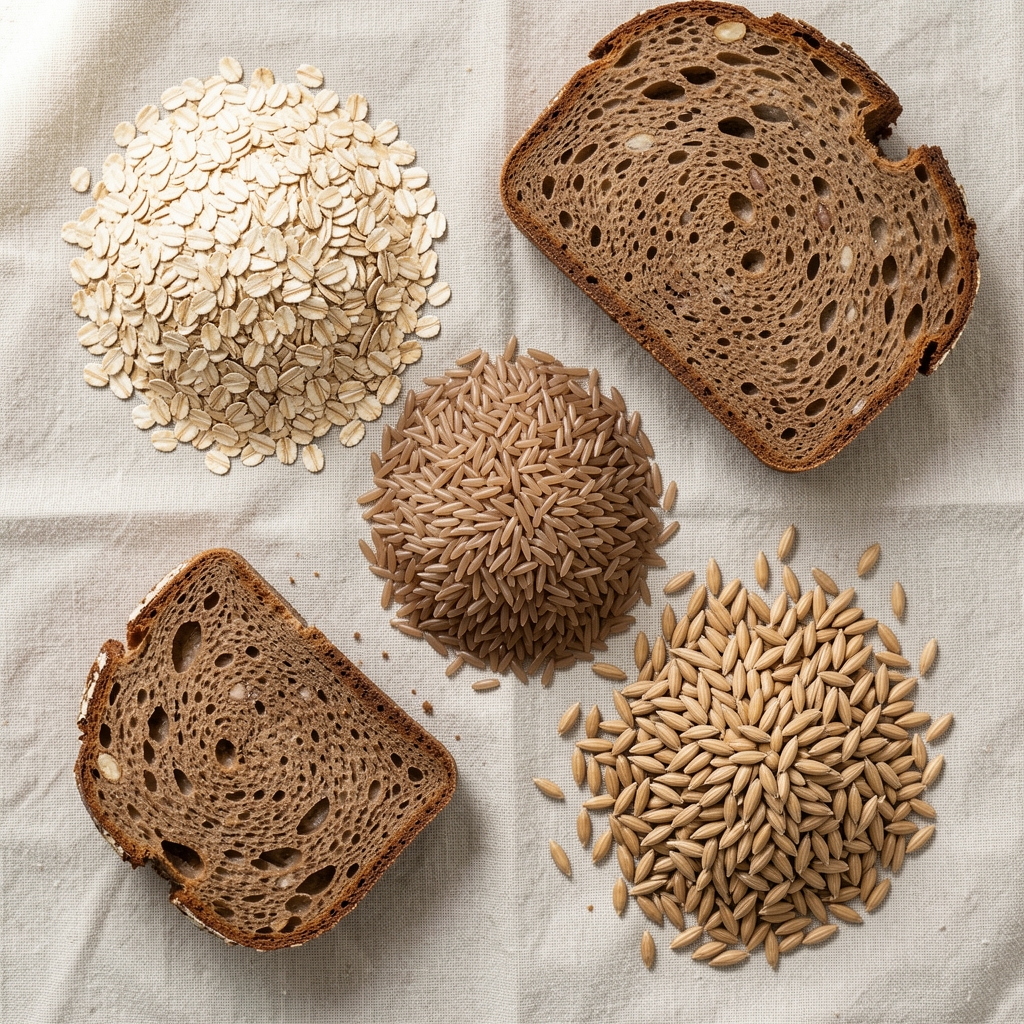
Short-term studies examining carbohydrate intake and weight loss often produce conflicting findings, partly because study durations of eight to twelve weeks are insufficient to observe the rhythm effects that longer eating patterns generate. A two-week reduction in refined grain consumption will not, in isolation, produce the sustained appetite regulation that years of habitual whole grain consumption appear to support.
A 2020 analysis published in the British wellness Journal, drawing on data from nearly 120,000 adults followed over sixteen years, found that higher whole grain intake was associated with a lower risk of long-term weight gain. Crucially, the association held after adjusting for total calorie intake, physical activity level, and other dietary variables. The implication is that whole grain consumption carries an independent signal in the body weight picture — not one reducible to calorie arithmetic.
This does not mean whole grain consumption alone determines body weight. Portion perspective, fat intake, meal structure, and overall eating patterns all contribute to the outcome. What the research does suggest is that displacing refined grains with whole varieties — without necessarily reducing total carbohydrate intake — tends to support a more favourable long-term body composition trajectory.
In everyday terms, the shift toward whole grains does not require structural dietary revision. Substituting wholemeal bread for white, choosing rolled oats over instant varieties, or incorporating spelt, barley, or farro into weekly meal preparation are modest changes that aggregate into meaningful nutritional differences over months.
A balanced plate approach, as outlined in the UK Eatwell Guide, recommends that starchy carbohydrates occupy roughly a third of a meal's composition — with a preference for whole grain forms wherever possible. The guidance is not prescriptive about exact grain types, reflecting the breadth of whole grain options available and the cultural variability in how carbohydrates are incorporated into British eating patterns.
What is consistent across the guidance and the research is the direction of the signal: greater whole grain content in the diet is associated, repeatedly and across different populations, with more stable body weight over time. The mechanism is gradual and cumulative. It operates through hunger signals, digestive patterns, and nutrient density rather than through acute calorie reduction — and that is precisely why it tends to be durable rather than short-lived.

Eleanor Whitfield is a contributing editor at Ralek Review with a background in nutritional journalism and food policy research. She writes on the intersection of eating behaviour, nutrient science, and long-term body weight patterns.
More from this author →